Daily practice that makes test day feel familiar.
CHItestprep helps Chicago families prepare for the CPS selective-enrollment exams with one short timed test every school day and a weekly report for parents. I designed, built, and launched it in four weeks — then let live funnel data overrule my first assumptions.
The problem
CPS doesn’t publish practice material for the Academic Center and Regional Gifted Center exams. Families choose between expensive tutoring and generic workbooks, and a lot of ten-year-olds walk into a high-stakes test that feels completely unfamiliar. The real problem wasn’t content. It was anxiety, and the lack of a simple habit.
My framing
Familiarity lowers anxiety, and small daily reps beat a weekend of cramming. So the product had to serve two people at once: a kid who needs a short, predictable routine, and a parent who wants to see progress without becoming the coach.
Constraints I designed around
- Zero teacher overhead — nobody assigns anything; practice shows up on its own.
- Bootstrapped — every channel and feature had to prove itself on a small budget.
- Kids on shared devices — a family code and a 4-digit PIN instead of email logins.
A short test every school day
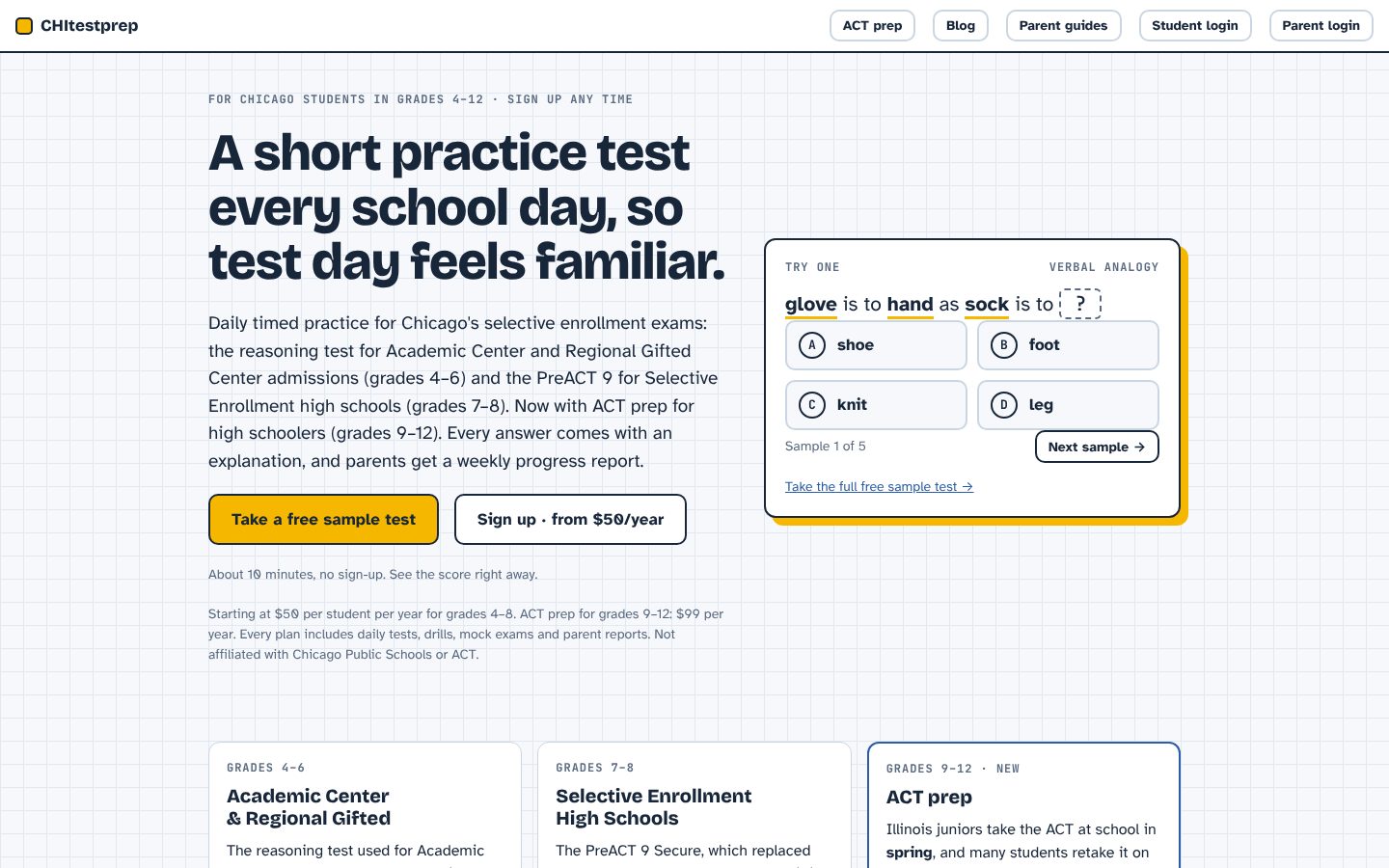
The logged-out home page leads with a sample question, so parents see the experience before they’re asked for anything.
Five decisions that shaped the product
- 01
Design for a habit, not a course
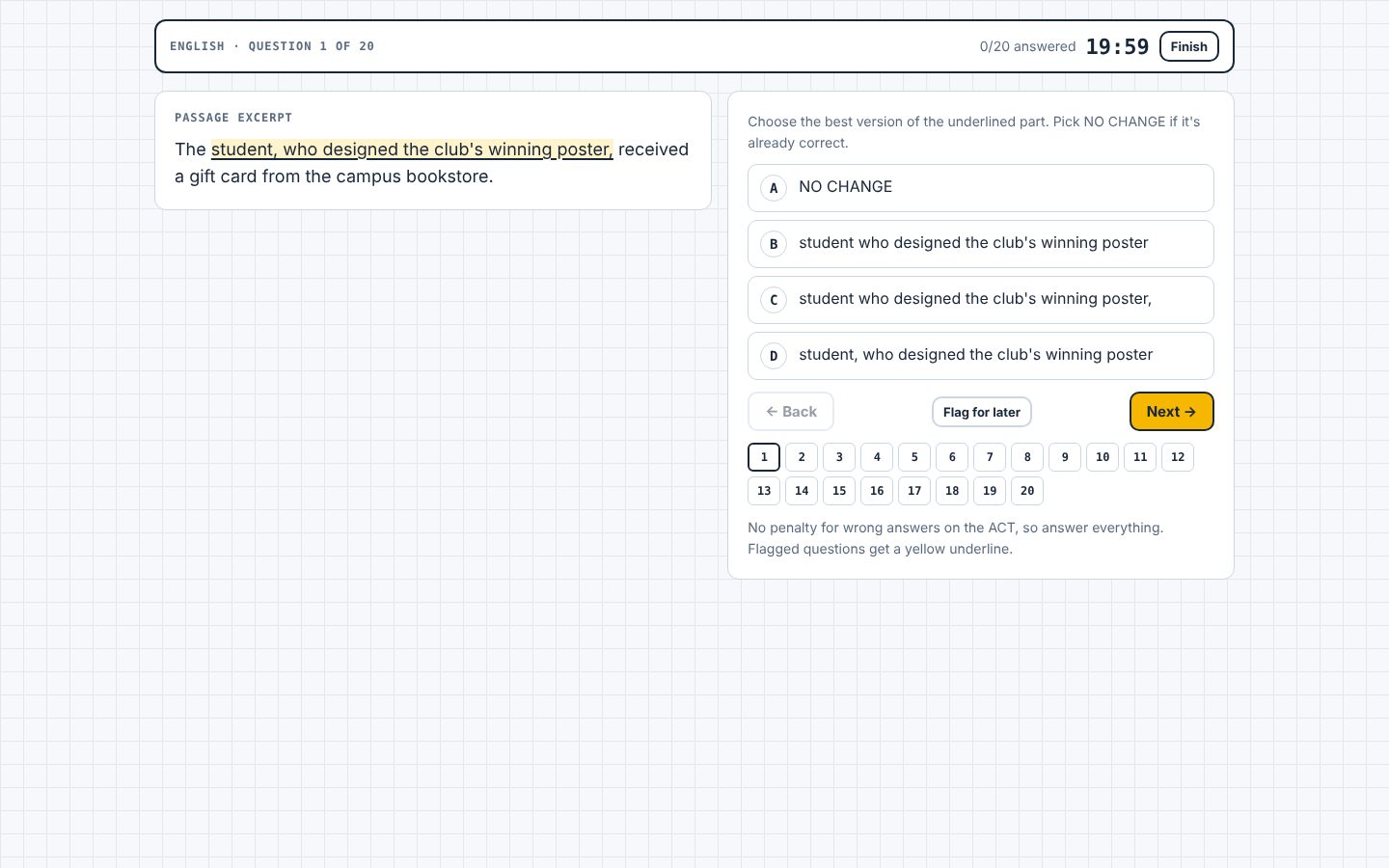
Every weekday a new 24-question timed test appears for every student — the same test for everyone that day. Missed days stay available as make-ups. Kids never browse a catalog; they just do today’s test.
- 02
Explain every answer
Each question carries a plain-language explanation. A wrong answer becomes the most useful moment of the session, not a dead end.
- 03
Make progress visible to parents
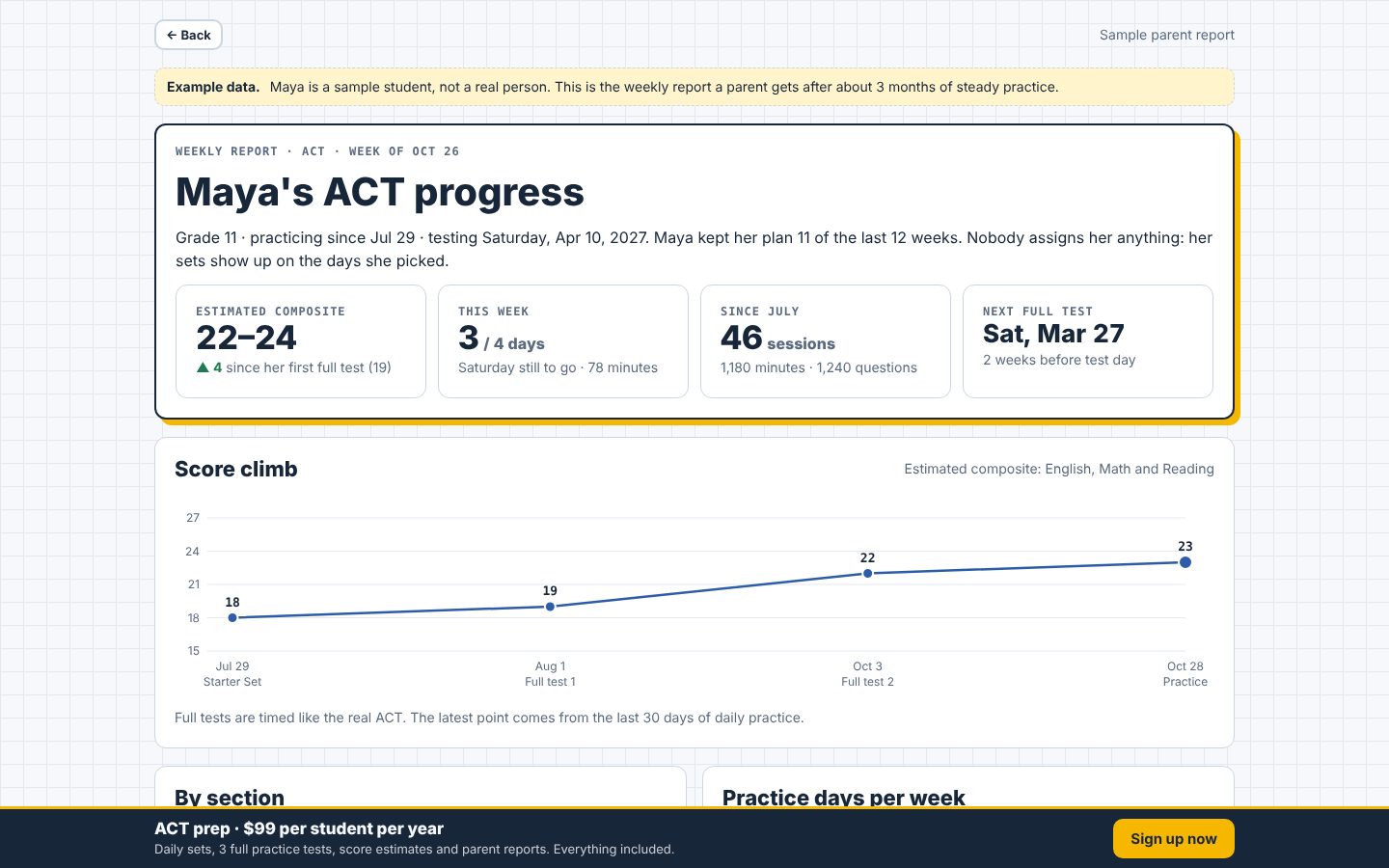
A weekly report is the first thing a parent sees: accuracy, pacing, and what to work on. A “review together” mode lets them add notes their kid sees in review.
- 04
Ship small, measure everything
Stripe checkout, an owner dashboard split by track and acquisition channel, and an automated daily check-in that reports sales, spend, and the three things worth doing today.
- 05
Let the data overrule me
I assumed paid search would be the growth engine. Two weeks of live data said otherwise, and I rebuilt the funnel around what it showed.
The finding: ~109 paid clicks, 0 sign-ups.
Google and Facebook ads brought parents to the site at a healthy click-through rate (8.8% on search), but nobody signed up. My read was two problems stacked on each other: the sign-up path asked for too much before showing value, and paid ads were reaching parents who weren’t ready to trust a new name.
The response: shorten the path, go where trust already lives.
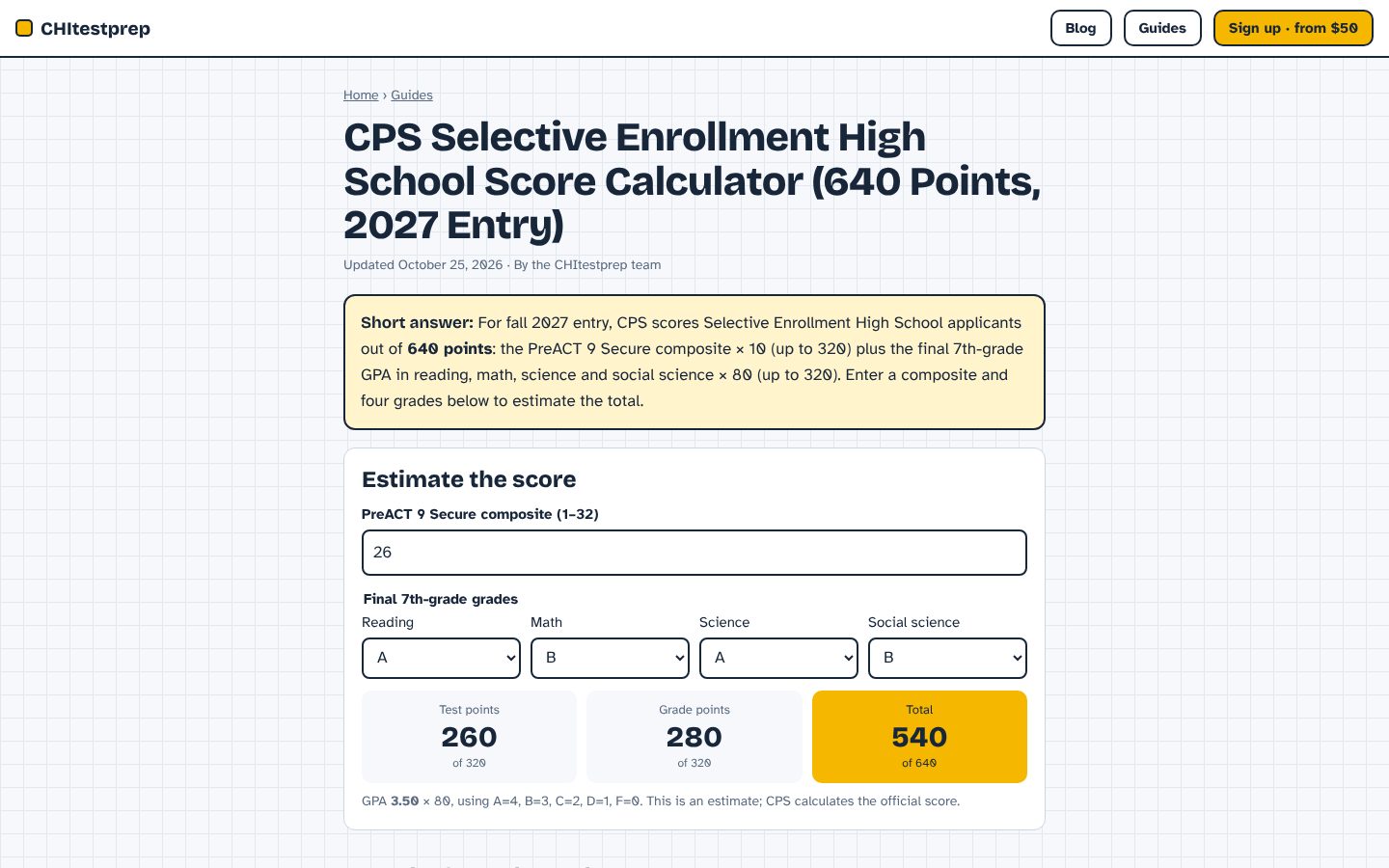
I moved to a pay-first, one-tap checkout that collects account details during onboarding, gated the free sample test so a family sees one full explanation before unlocking the rest, and added one-tap payment links to reminders. At the same time I shifted effort from ads to the parent communities families already rely on, and to search guides like a score calculator and a GoCPS checklist.
Results after the funnel rework
Owner dashboard and Google Search Console, as of Nov 16, 2026. Total ad spend for the season was about $75.
Built to be trusted
A product parents pay for can’t break on a Tuesday night. Every change runs 200+ automated tests, and a browser test plays a parent, a student, and the owner through sign-up, payment, practice, and reporting before anything ships. A read-only check hits the live site every morning. 28 changes merged in the first four weeks.
The product now covers three tracks: grades 4–6 (Academic Center and Regional Gifted), grades 7–8 (PreACT 9 for selective high schools), and ACT prep for grades 9–12, where students build their own study plan.
Reflection
The best decision I made was instrumenting the funnel on day one, because it made being wrong cheap. If I ran it again, I’d test the channel before spending on ads and put the sample test in front of the paywall from the start. Next up is retention: nudging students who go quiet before renewal comes around.
I made the product decisions and Claude Code did the production work: question banks, the test engine, Stripe, and the test suite. An AI operations agent reads the dashboard, ad accounts, and Search Console every morning and emails me a check-in with the numbers and the next three actions.