Research
Competitive benchmark
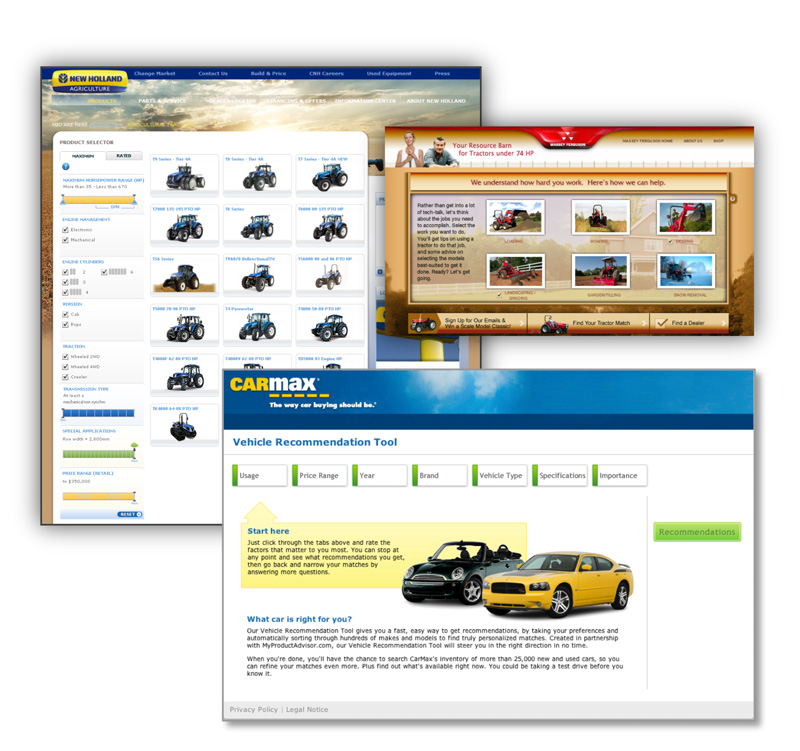
Selectors across agriculture and the auto industry — including CarMax’s recommendation tool.

As creative lead for the John Deere account, I shipped the first version of a flexible, reusable product-selector framework — built so divisions across one of the world's most recognized brands could adopt a single corporate-wide solution.
John Deere wanted a product-selector experience on its global marketing platform — a way for customers to find the right machine and for dealers to be supported in the sale. The catch: it couldn’t be a one-off. It had to work for radically different buyers, fit the existing platform, support the dealer relationship rather than bypass it, and be reusable enough that divisions across the company would actually adopt it.
As Creative Director and account creative lead, I defined the product’s needs with the client and led a multidisciplinary team — two UX and two visual designers, plus eight offshore engineers — to research, design, and ship the first iteration.
I designed for three very different buyers, grounded in real research — 3 dealers and 10 customers interviewed, plus competitive benchmarks from agriculture to the auto industry:
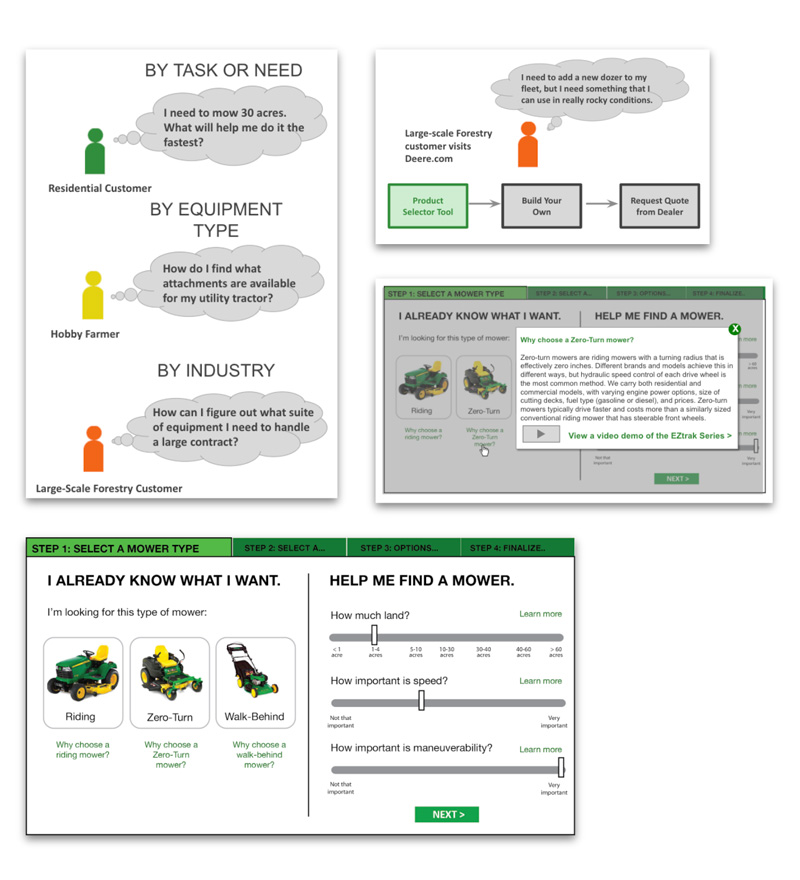
A guided “Help me decide” wizard for novices and fast faceted navigation for experts — slotted into the real path to purchase, not bolted on.
Fit the journey, don’t fight it.
The selector aligned with existing tools like Build Your Own and Request a Quote — feeding the dealer relationship instead of competing with it.
Two paths: novice and expert.
A guided wizard for customers who don’t know the products, and faceted navigation for buyers who want to filter fast.
We delivered a flexible component framework inside the John Deere platform’s design system:
Selectors across agriculture and the auto industry — including CarMax’s recommendation tool.
Mapping the commercial customer’s path so the selector fed, not fought, the dealer relationship.
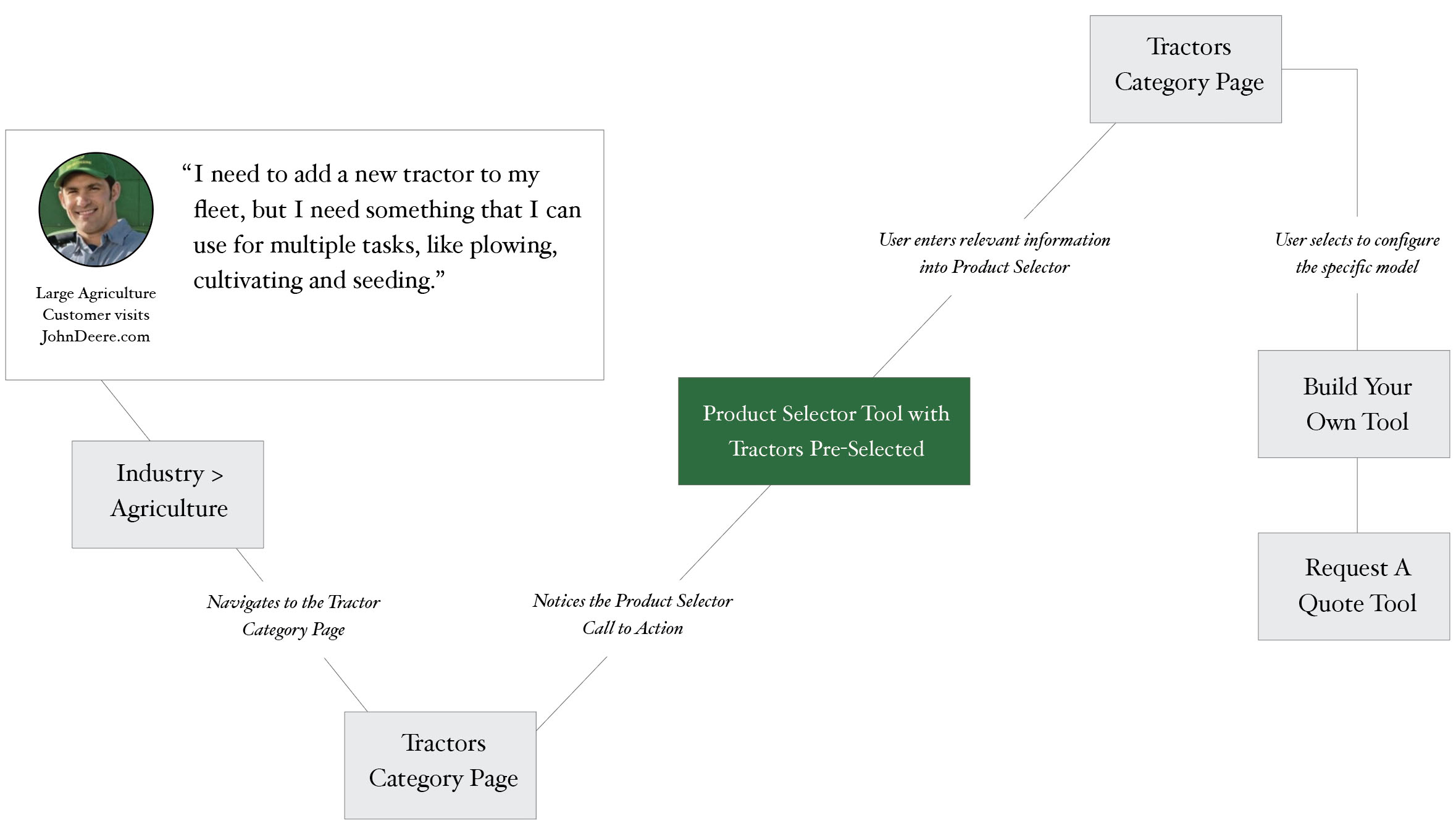
From selector to Build Your Own to Request a Quote.
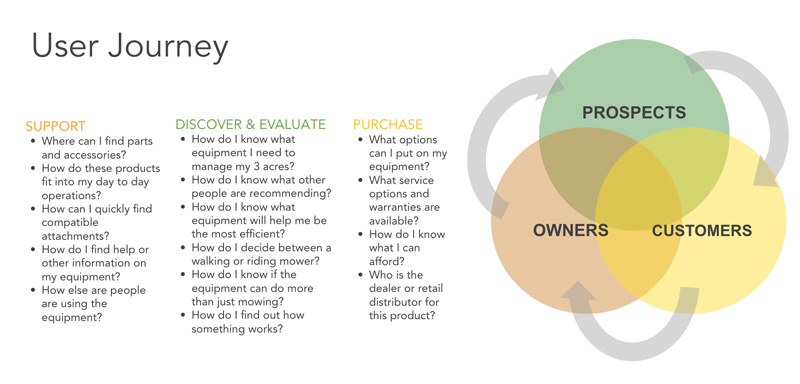
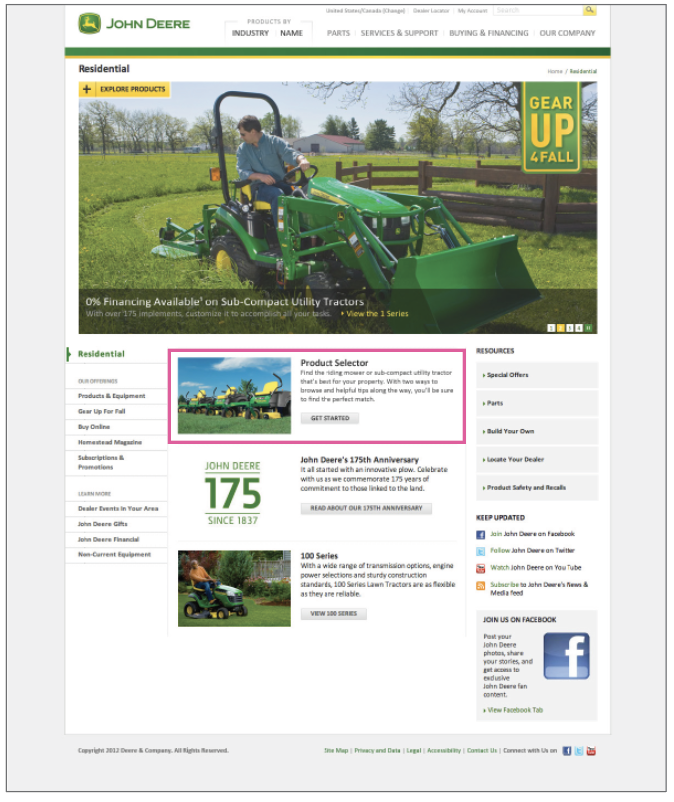
Where customers start on JohnDeere.com.
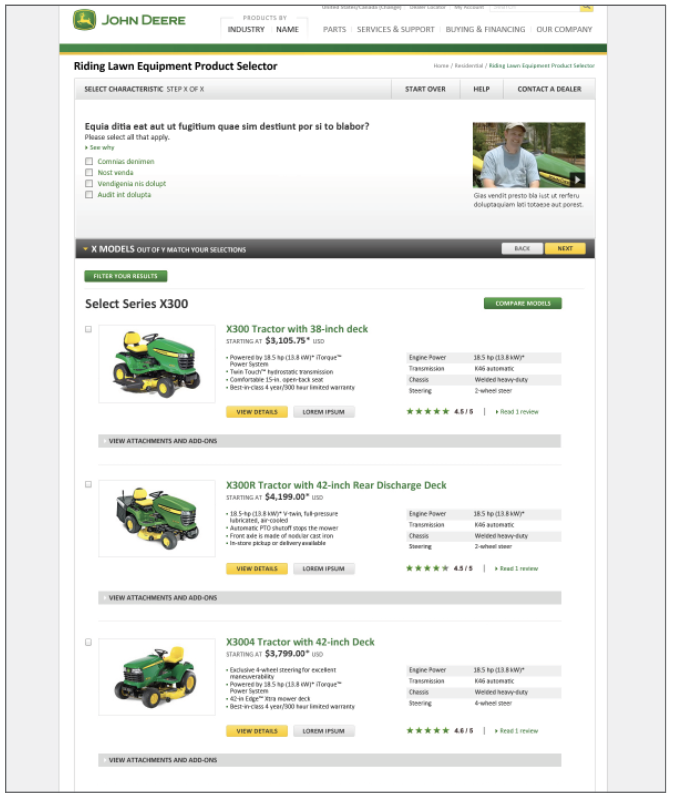
The guided path for customers who don’t know the products.
Fast filtering for expert buyers.
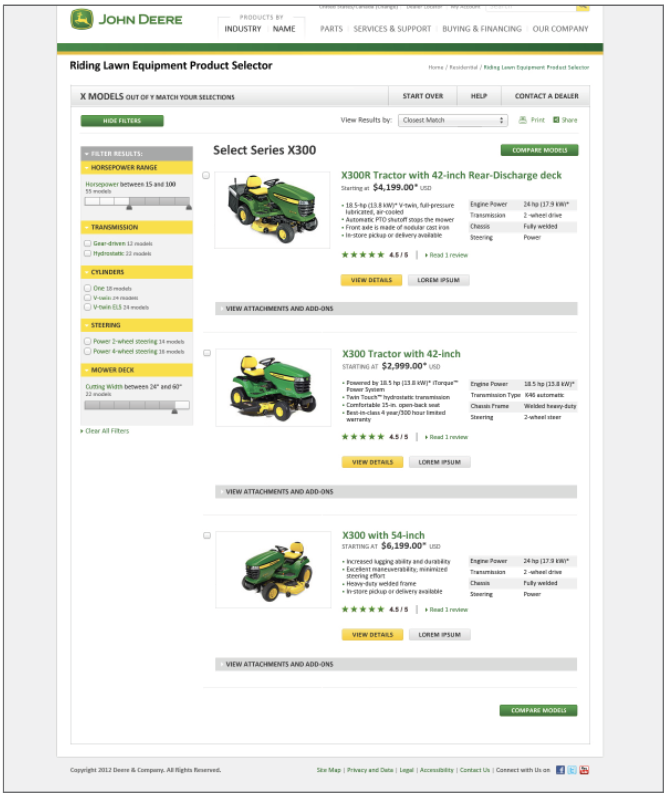
Lists that educate and surface options.
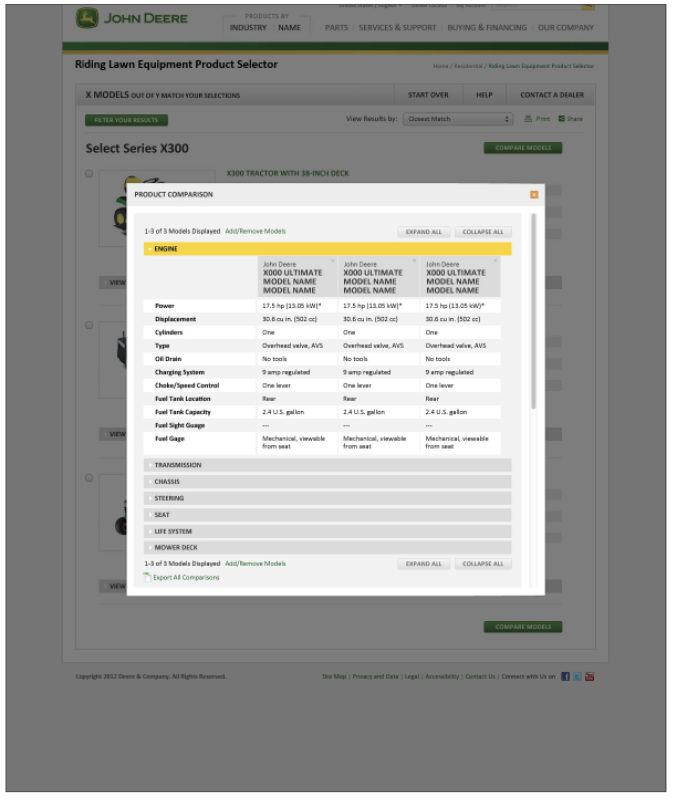
Side-by-side comparison to aid the decision.
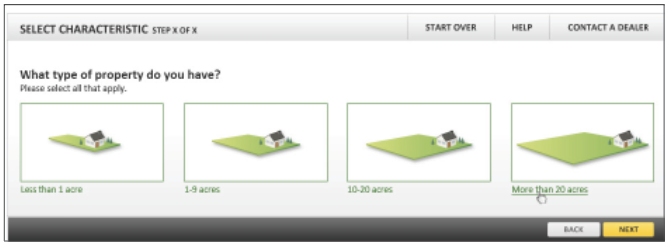
The component template corporate teams populate themselves.
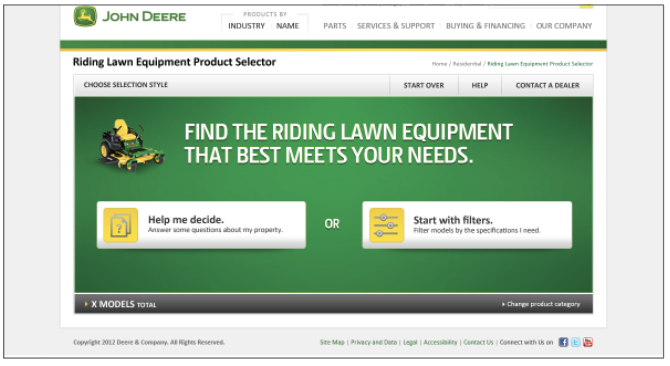
The framework re-skinned for another division.
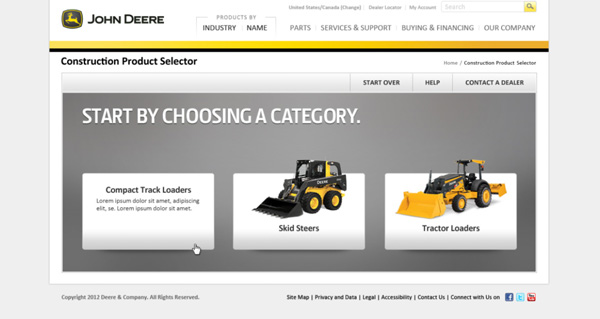
Adopted by another brand on the same framework.
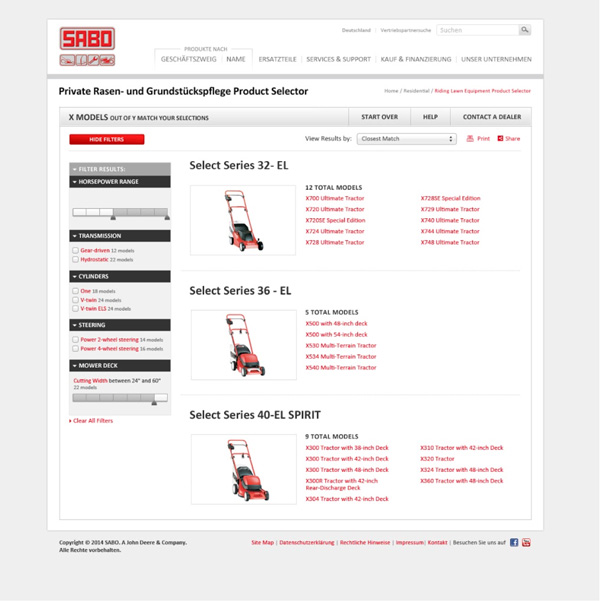
The hardest, most valuable part wasn’t any single screen — it was designing for adoption. A framework only scales if other teams choose it, so the real problem was making the system flexible and documented enough that divisions across a global company would commit. Building one tool with two distinct paths — novice and expert — became a pattern I’ve used ever since.
“He has extensive knowledge and expertise in building and shipping large-scale products. His devotion to the quality of design helped drive the team to not only meeting delivery goals, but often exceeding client expectations.”