Repositioning a sports-PR firm as the strategic partner it is.
MVT is a strategic communications consultancy for sports sponsorships, with work for Cisco, lululemon, and the BNP Paribas Open. Its old site read like a generalist PR shop and produced no organic leads. I led discovery, positioning, design, and build, and set the firm up to run the site itself.
The problem
MVT’s business-development research showed top agencies source most of their leads from their own website. MVT was getting almost none. The Wix site felt stagnant, undersold what the firm actually does, and couldn’t support the content or technical SEO the firm needed.
Reading the data first
Before designing anything, I went through ten weeks of their analytics: about 28 visitors a week, a 75% bounce rate, and AI crawlers already indexing the site daily. That pointed to a top-of-funnel and content problem, not a conversion-tuning one. So I set an honest bar up front: at least one qualified organic lead in three to four months, with search compounding over quarters after that.
Positioning first, then pixels
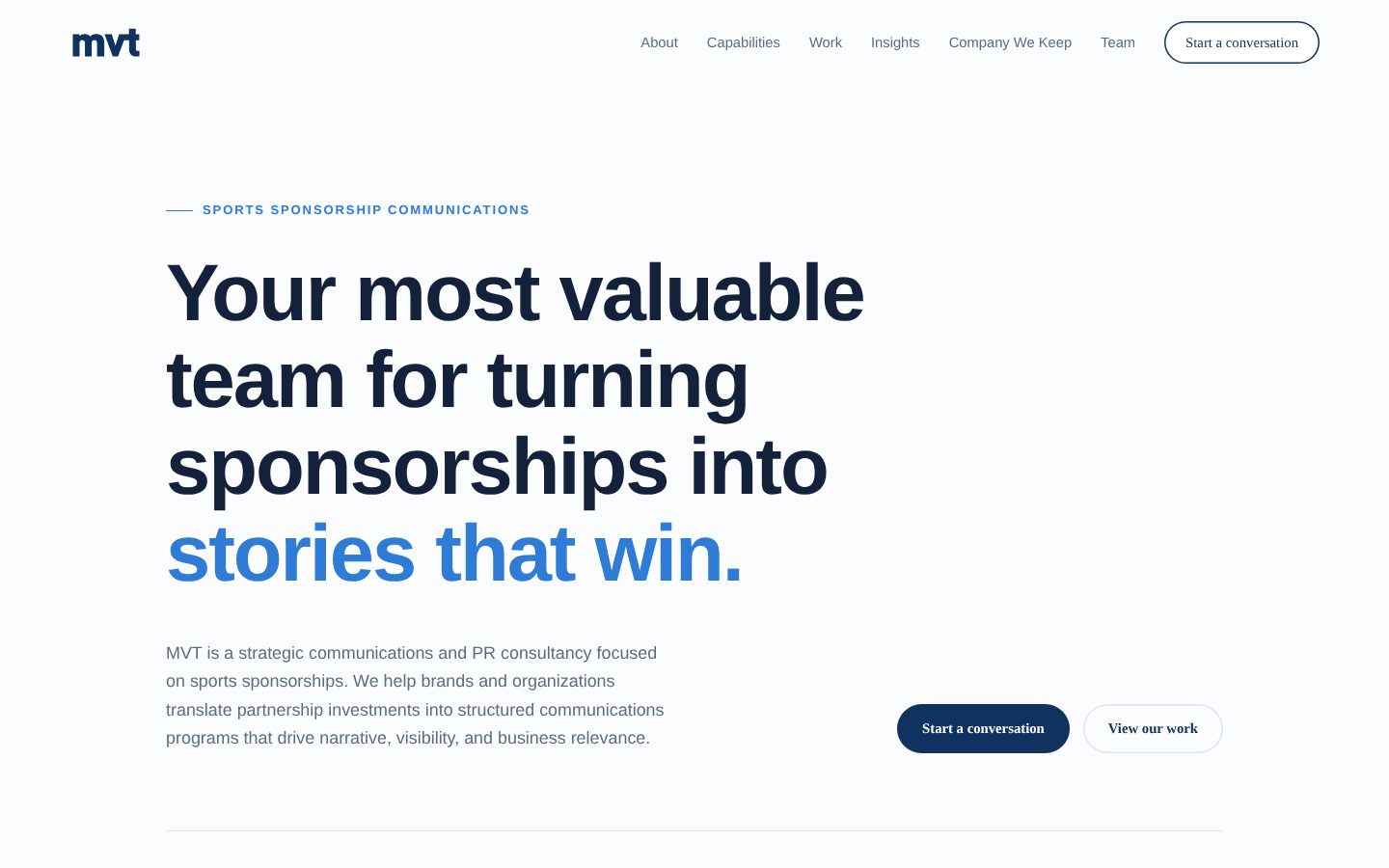
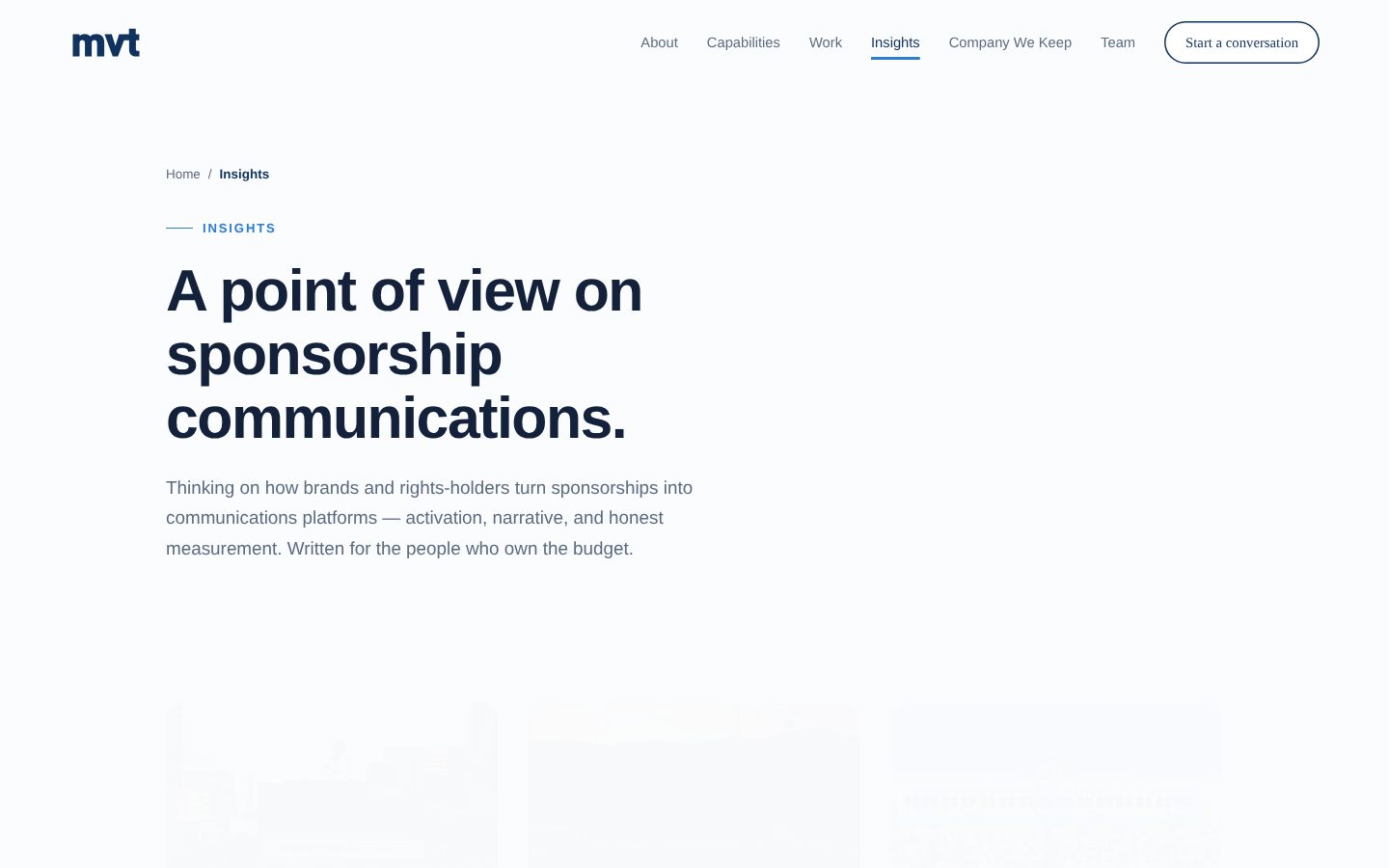
The home page leads with MVT’s own positioning: turning sports sponsorships into communications platforms.
From brief to a site the client owns
- 01
Write the brief together
A product brief covering the problem, baseline data, goals, audiences, scope, and risks, signed off in a private client workspace before any design work started.
- 02
Treat positioning as the source of truth
MVT already had sharp positioning. I built the information architecture around it and presented capabilities as one connected system (narrative strategy, communications planning, activation, measurement) instead of a menu of services.
- 03
Diverge, then converge
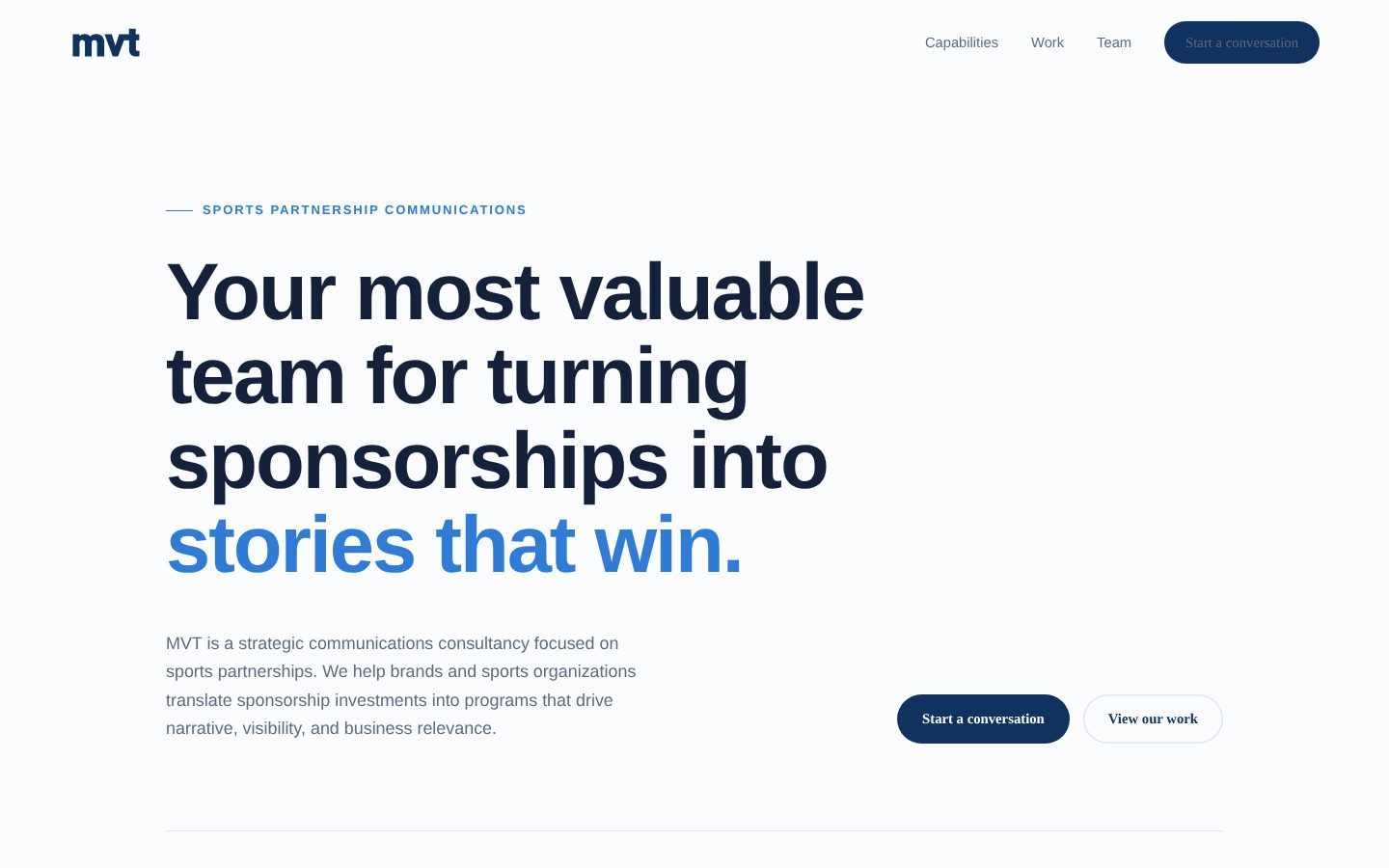
Three distinct concept directions, reviewed side by side in the workspace. The client chose the classic, clean direction.
- 04
Make the work repeatable
One case-study format (platform, story, what MVT built, impact), tagged by capability and cross-linked to Insights, so every new project strengthens the whole site.
- 05
Design for Google and AI answers
Three keyword layers (positioning, problem, thought leadership), clean URLs, structured data, an indexable Insights section, and lead-source attribution on the contact form.
- 06
Enable, don’t create dependency
The code, hosting, and domain moved to MVT’s own accounts, along with a Claude-driven publishing workflow so the team can keep the site fresh themselves.
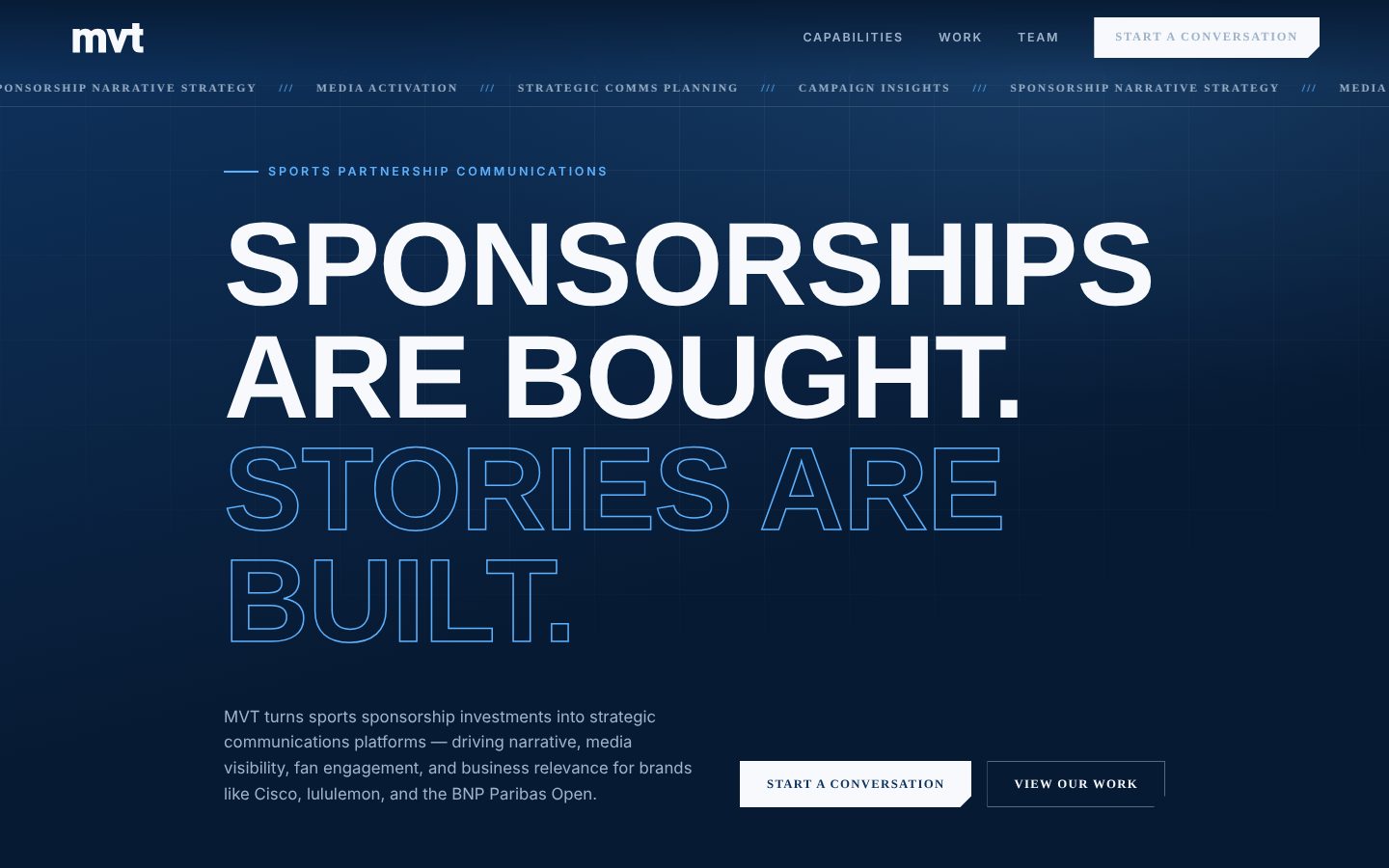
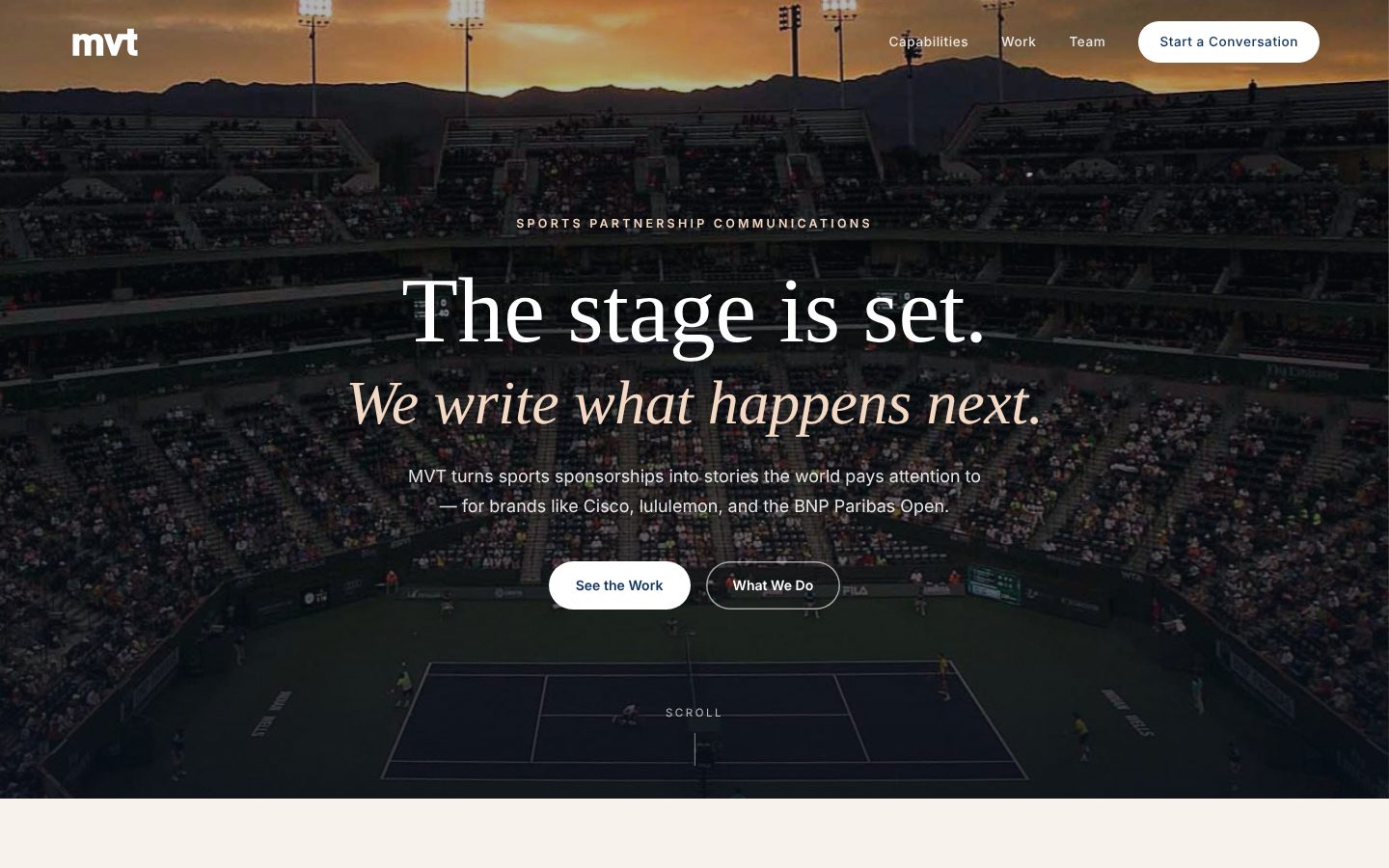
Three directions, one decision
Bold editorial, classic clean, and cinematic. Each one was a working page, so the client was reacting to real layouts and copy, not mood boards.
Results so far
Within a month of launch, MVT’s leadership told their partners the firm was building around the new site. Post-launch traffic and lead data now live in MVT’s own analytics, measured against the baseline captured at kickoff. I’ll update this section as those results come in.

Reflection
Setting a measurable, modest target before kickoff changed every conversation that followed: scope debates became questions about what moves organic leads. If I did it again, I’d wire Search Console and lead-source reporting into a shared dashboard on launch day, so results are visible to both sides from the first week.
Claude Code made a custom build realistic on a small-firm budget and timeline. Concepts became working pages within days, feedback documents turned straight into changes, and the publishing workflow I handed off lets MVT draft and ship keyworded articles without a developer.